






Instant Recall: 110th Indianapolis 500 Presented by Gainbridge

Curt Cavin
INDYCAR Staff Writer
MAY 26, 2026
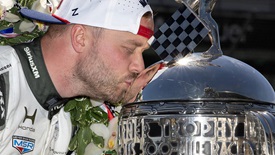
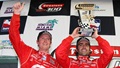
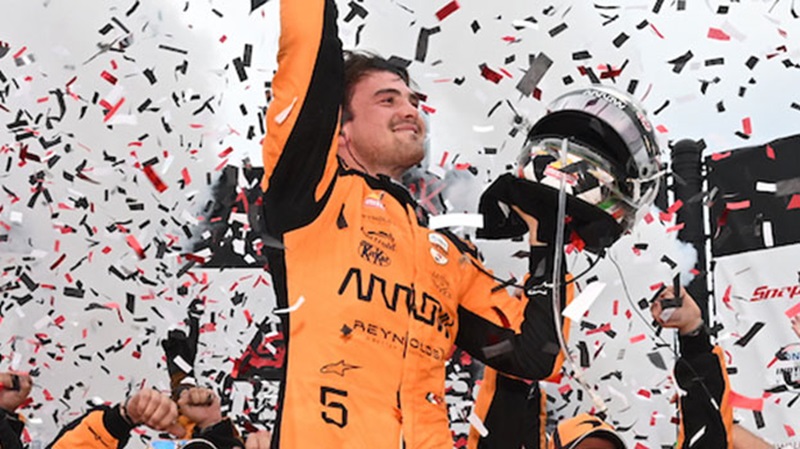
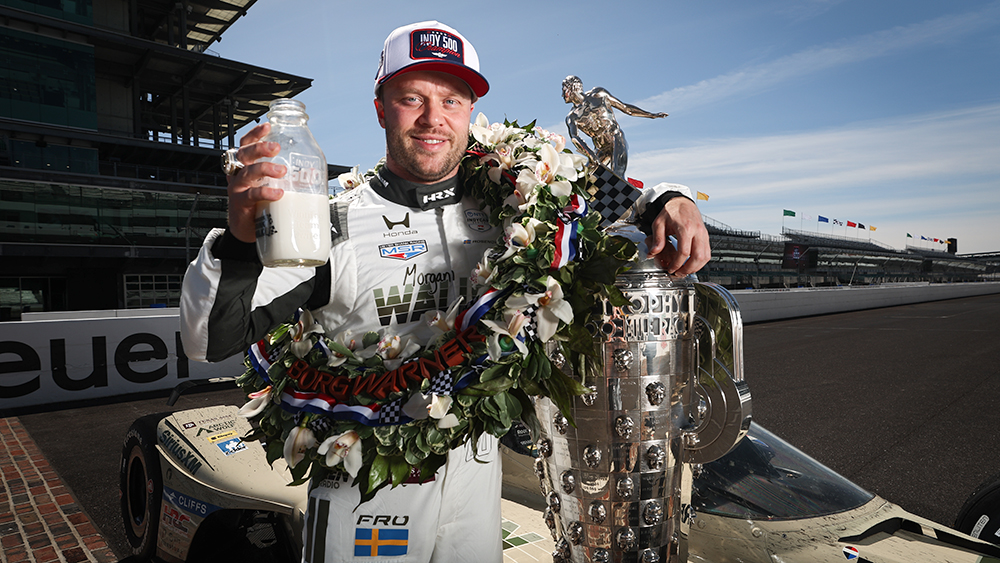
More than an hour after winning the Indianapolis 500 presented by Gainbridge, Felix Rosenqvist fielded a question related to Al Unser Jr.’s famous quote about the gratification of winning this race trumping everything, including the prize money that comes with it.
The Swede briefly paused, assessing the depth of the statement. Then he realized the second part of the question.
“Actually, now that you said money, that’s the first time I’ve thought about it,” he said, smiling.
Rosenqvist indeed had been too absorbed in the euphoria to give thought to the spoils of the historic victory. His drive to win Indy had been off the charts, so much so that even on what he described as “a gnarly” last lap, he admitted never hearing his spotter’s radio calls. Rosenqvist so much wanted to win this race that the final minute was an out-of-body experience, and he wanted to win more than he could describe, as Unser had 34 years to the day.
“I’ll definitely say (the nerve to race like that) arrived when it needed to,” he said. “I’ve never been flat around the high line for more than one corner (at Indianapolis Motor Speedway). Yeah, to do a whole lap on the outside, that was pretty cool – kind of unheard of at Indy.
“Yeah, that’s just how much you want it – it’s hard to explain that feeling that you want it so much and you have so much adrenaline that you literally don’t care if you’re going to crash. You’re just going all in.”
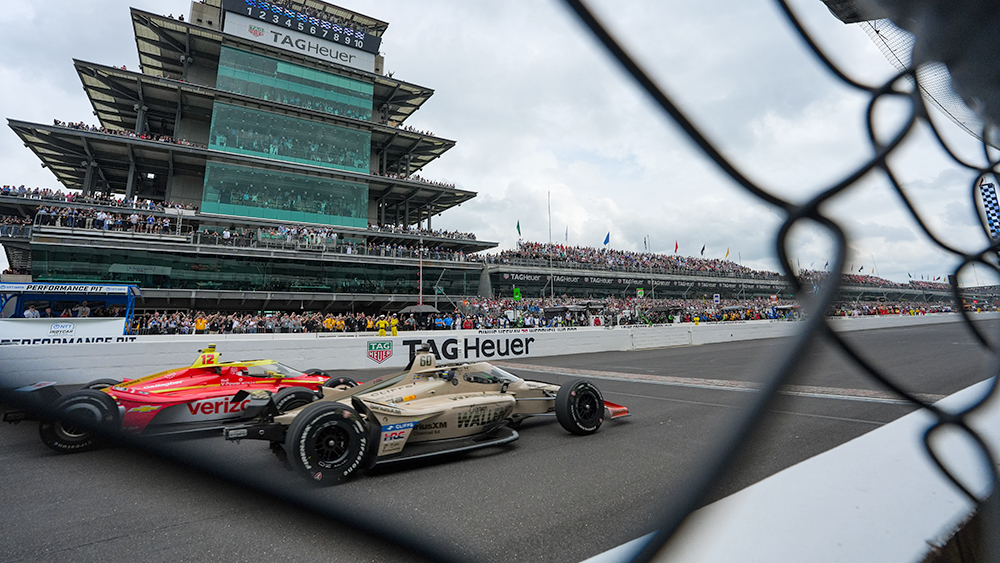
Rosenqvist certainly did, escaping a nearly lap-long, side-by-side duel with Meyer Shank Racing w/Curb-Agajanian teammate Marcus Armstrong before setting his sights on race leader David Malukas coming out of Turn 4. Within sight of the checkered flag, Rosenqvist swept to the outside of the Team Penske driver to create one of the most stunning moments in event history.
Virtually side by side at the finish line, the separation of the two cars was a eye-blink .0233 of a second, the closest margin ever, breaking the 1992 mark that saw Unser edge a charging Scott Goodyear by .043 of a second.
“It was cool that that’s what it took to win it,” Rosenqvist said.
For what it’s worth – and it’s worth a lot – Rosenqvist and his team was rewarded with a payout of $4.34 million, the largest winnings in event history.
The overall purse of $30,906,400, a 50 percent increase over last year, reflected just how good of a cap the race put on a terrific month. For starters, there were no significant injuries during the elite on-track action, and the race saw a record 70 passes for the lead, in part because the high line wasn’t the risky proposition it often was in the past. (Rosenqvist credited the lack of excess tire rubber up there.)
The 200-lap affair was witnessed by the second consecutive grandstand sellout and only the third ever in 110 races. Despite inclement weather seemingly surrounding IMS, the race had only a brief interruption for conditions.
The field featured nine past winners – one shy of the record – and featured Helio Castroneves, who was taking another shot at becoming the event’s first five-time winner. While four of the others were out in the first 125 laps, reigning champion Alex Palou, the pole sitter, was in hot pursuit to become the seventh driver to win in consecutive years. He led a race-high 59 laps but settled for seventh place as the fuel strategy his team employed dropped him in the lead group.
Palou was one of 14 drivers to lead the race. Chip Ganassi Racing teammate Scott Dixon led 32 laps to extend his career “500” record to 709. Malukas led 30 laps, Rosenqvist 25.
Having two prominent fuel strategies in play in the final quarter of the race added to the drama. As it turned out, both worked as the top 10 finishers were nearly split in their implementation of them. Rosenqvist used the one considered to be the alternate strategy, but he also ran with the lead group for much of the race.
Eighteen drivers finished on the lead lap, including Rahal Letterman Lanigan Racing’s Mick Schumacher, who was selected as the Rookie of the Year. Fellow rookie Caio Collet led nine laps.
Collet’s Turn 2 accident on Lap 192 created the sprint to the finish, but the race already was shaping up to be one for the ages. What happened in those final laps almost defies description. Case in point: The last-lap shootout featured five cars that finished less than a half-second of one another, and all of them were pursuing their first Indy win. Team Penske’s Scott McLaughlin passed Armstrong and Arrow McLaren’s Pato O’Ward coming to the Yard of Bricks, creating nearly a photo finish for third place.
With this being the 110th Running, it’s difficult to rank the best of the best, but this one might be No. 1 given the minimal separation of the top two finishers and the 70 lead changes, both records. It certainly ranks as the best for Rosenqvist.